All-you-need-to-know for tonight's England vs Croatia World Cup Game
Tenberal correpsondent Simon Wong reports:
The "blockbuster" World Cup game of England vs Croatia is about to kick off in less than one hour later, this is an all you need to know for the game.
- Date: Wednesday, June 17, 2026
- Kick-off Time: 9:00 PM BST (3:00 PM local time in Texas)
- Location: Dallas Stadium (AT&T Stadium) in Arlington, Texas, USA
- Weather: In Arlington, TX, United States, it is currently sunny and 32°C, though it feels like 38°C, with a 15 mph wind coming from the south and 57% humidity. Regular hydration breaks are expected, however, the game is air-conditioned, also regarded as one of the largest air-conditioned in the world.
-
Main Referee: Clément Turpin (France), in 2023, Turpin has sent off Thomas Tuchel as he was managing Bayern Munich against Manchester City.
-
Assistant Referees: Nicolas Danos & Benjamin Pagès (France)
-
Fourth Official: Katia García (Mexico)
- TV Channel: ITV1 (Coverage starts at 8:00 PM BST for an hour of pre-match build-up).
-
Live Stream: ITVX (Available via the app on mobile devices, tablets, and smart TVs, or via web browsers)
- England XI (4-2-3-1)
Pickford; J. James, Konsa, Stones, O'Reilly; Rice, E. Anderson; Madueke, Bellingham, Gordon; Kane.
- Croatia XI (3-4-2-1)
Livaković; Šutalo, Vušković, Gvardiol; Stanišić, P. Sučić, Modrić, Perišić; Baturina, M. Pašalić; Musa.
- This is Thomas Tuchel’s first competitive tournament match in charge of the Three Lions and previously, England has been unbeaten for all of its game in the qualifiers, without conceding a single goal.
- If Harry Kane plays, it will be his 30th major tournament appearance, setting a new record for an England men's player. Meanwhile, Luka Modrić joins an elite group of players appearing in their 5th career World Cup.
- Despite Croatia has beaten England in 2018's semifinals, hopes are rising as England won against Croatia at Euros 2020.
- England is heavily favored to win at around -139 (8-11), with Croatia valued as the underdogs at +394.
- Fans Support: The stadium is almost full with live reports, capturing around 35-40% England fans and 25-30% fans from Croatia.
Follow Tenberal News for more updates as our correspondents will sit in with you to enjoy the match.
Now, sit back and relax to enjoy this once-in-four-years opportunity.
England Team Equipment Stolen in US: Full List of Missing Items Revealed
Tenberal Correspondent Simarpreet Singh reports:
A full breakdown has been released of equipment taken from an England football team vehicle after reports emerged the national side's gear had been stolen in the United States. Two men have now been charged in relation to the theft, according to prosecutors.
The full list of stolen goods included several expensive signed shirts, training equipment and miscellaneous items with several of the possessions having a value in the thousands of dollars.
In terms of monetary value, among the biggest losses were signed football shirts - one red £4000 shirt and two white shirts costing £4000 each totaling £12,000 worth of signed memorabilia.
Other sports equipment was also stolen in the theft, including four pairs of boots valued at £1,072.48, five pairs of shoes costing £907.59, a World Cup football worth £171.60 and gloves costing £128.69.
The non-sporting items taken also varied. One JBL speaker was taken with a value of £119.95, one Lego Nike Air shoe set was worth £79.99 and three power strips were valued at £32.
Also listed with no specified values were: four navy long-sleeve shirts, four pairs of navy shorts, four light blue long-sleeved shirts, four light blue short-sleeved shirts, and two stuffed lion mascots.
The US authorities have not yet elaborated on the full story of how the items were stolen, but the case is now advancing through the courts.
Full list of stolen items
| Item | Value |
|---|---|
| Red signed football shirt | £4,000 |
| White signed football shirt | £4,000 |
| White signed football shirt | £4,000 |
| Four pairs of boots | £1,072.48 |
| Five pairs of shoes | £907.59 |
| World Cup football | £171.60 |
| Goalkeeper gloves | £128.69 |
| JBL speaker | £119.95 |
| Lego Nike Air shoe set | £79.99 |
| Three power strips | £32 |
| Navy long-sleeve shirts (x4) | Not specified |
| Navy shorts (x4) | Not specified |
| Light blue long-sleeve shirts (x4) | Not specified |
| Light blue short-sleeve shirts (x4) | Not specified |
| Stuffed lion mascots (x2) | Not specified |
How Spain VS Cape Verde depict the World Cup's virtues
Tenberal correspondent Simon Womg reports, first published on 15.06.2026, edited on 21.06.26
Tenberal Opinion
Instead of the expected shock-to-the-system thrashing by Spain, it was the underdogs, Cape Verde, who truly caught everyone's eye with their disciplined organisation and ironclad defence. Their 40-year-old goalkeeper, Vozinha, made seven incredible saves, which, combined with the team's unified defensive effort, successfully kept a clean sheet.
In fact, face-to-face with a Spanish side that was expected to cruise to an easy victory, Cape Verde looked like the more cohesive and focused team. This was especially true during stoppage time, when an unmarked header from a corner kick nearly rewrote the destiny of both nations. Fortunately, lady luck smiled on Spain, preventing a truly shocking upset—though it was still more than enough to make them break a sweat.
What was expected to be a goal-fest ultimately ended in a scoreless draw. While it wasn't technically a defeat, Spain's failure to find the back of the net despite 27 shots on goal feels like a massive upset for the heavy favourites. Conversely, for Cape Verde, a draw felt just like a victory, as they "won" their first-ever World Cup point in history.
Across the years, World Cup is no longer a stage only for world-class footballers from stronger nations, like Spain, England etc. It is about how football teams across the world showing the best of their countries: their culture, their lives, through the connection of football, and this is what the World Cup means. In fact, spectacular underdogs matches have been seen in this World Cup: Bosnia and Herzegovina had drew with World No.12 Italy in the World Cup Qualifiers.
A single point in the World Cup is never easily earned, let alone when taken from the world number-two ranked team and title favourites. It is only natural that tears welled up in their eyes—they absolutely earned it.
Anthropic's Two New AI Models Are Posing As A Potential Global Threat
Anthropic's new AI models Fable 5 and its sister model Mythos (both released on the 9th of the June) have already been on the radar of many global superpowers, and banned, due to it posing as a security threat to governments, International security, cybersecurity companies, and more.
These two new AI models made by Anthropic (the company who made the AI model Claude) were meant to be state-of-the-art pieces of software exceeding the expectation of any AI model yet. Fable 5 is an AI with unbelievable outcomes and results but with "safety limits on" and has been distributed to the general public, while its sister program Mythos is the same AI engine but with safety limits off and has been distributed only to cyber security companies, governments and other national security organisations.
Due to the sheer power, danger and potential, the AI engines have been banned from public use just three days after being released. This was ordered by the US government, and the exact reason was that it could be used as hacking intelligence which could cause world wide cyber attacks due to the power of these two engines and it would be incredibly hard to stop if one had started. In addition, the UK AI security team found that Mythos could successfully bypass cyber defences 73% of the time.
To summarise, AI, and the use of it is growing every minute with new software and ideas being sprung to life, and although it's an incredibly useful piece of software and it will certainly speed up human advancement, if we do not take precautions or develop AI too far, it may be too advanced or fall in the wrong hands.
African world cup referee is denied ⁉️
Tenberal Correspondent Ollie Cannon Reports:
With the world cup having kicked off, eyes are beginning to turn to the public scandal regarding Artan, the 2025 African referee of the year 2025 winner. The 35 year old was set to be the first Somali ever to officiate a world cup game but his hopes were crushed as he was turned away by US customs and border police despite having a valid visa. Tenberal understands that he was denied entry into the US for "association with suspected members of terror organisations".
Matches Tonight (14.06.2026)
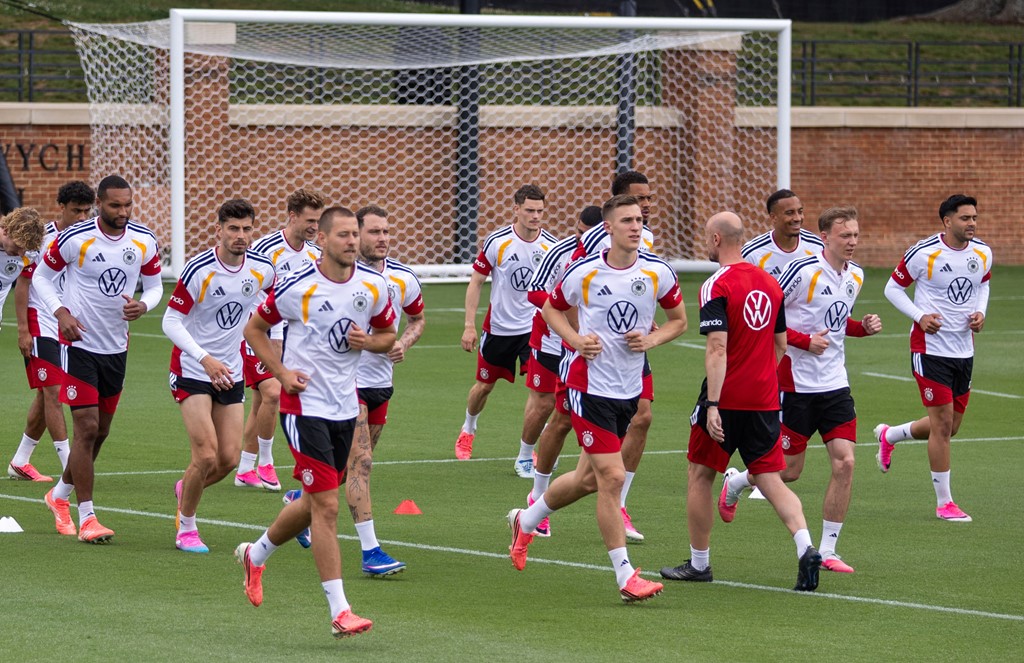
Tenberal correspondent Simon Wong reports:
For the next 12 hours, these are matches happening today:
- Germany vs Curacao, Houston, 6pm
- Netherlands vs Japan, Dallas, 9pm
- Ivory Coast vs Ecuador, Philadelphia, midnight
- Sweden vs Tunisia, Monterrey, 3am
Follow Tenberal News for regular updates of the World Cup.
FIFA World Cup Leaderboard
 Group A
| Rank | Team | Played | W | D | L | GD | Points |
| 1 | Mexico | 1 | 1 | 0 | 0 | +2 | 3 |
| 2 | Republic of Korea | 1 | 1 | 0 | 0 | +1 | 3 |
| 3 | Czechia | 1 | 0 | 0 | 1 | -1 | 0 |
| 4 | South Africa | 1 | 0 | 0 | 1 | -2 | 0 |
Group B
| Rank | Team | Played | W | D | L | GD | Points |
| 1 | Switzerland | 1 | 0 | 1 | 0 | 0 | 1 |
| 2 | Canada | 1 | 0 | 1 | 0 | 0 | 1 |
| 3 | Qatar | 1 | 0 | 1 | 0 | 0 | 1 |
| 4 | Bosnia & Herzegovina | 1 | 0 | 1 | 0 | 0 | 1 |
Group C
| Rank | Team | Played | W | D | L | GD | Points |
| 1 | Scotland | 1 | 1 | 0 | 0 | +1 | 3 |
| 2 | Brazil | 1 | 0 | 1 | 0 | 0 | 1 |
| 3 | Morocco | 1 | 0 | 1 | 0 | 0 | 1 |
| 4 | Haiti | 1 | 0 | 0 | 1 | -1 | 0 |
Group D
| Rank | Team | Played | W | D | L | GD | Points |
| 1 | USA | 1 | 1 | 0 | 0 | +2 | 3 |
| 2 | Turkey | 0 | 0 | 0 | 0 | 0 | 0 |
| 3 | Australia | 0 | 0 | 0 | 0 | 0 | 0 |
| 4 | Paraguay | 1 | 0 | 0 | 1 | -2 | 0 |