Reporter
Jorawar Badhan
Writes reports for the public.
Delivering trusted journalism since 2025. We bring you breaking news, in-depth analysis, and the stories that matter - with integrity and accuracy in our weekly reports.
Join the official Tenberal News WhatsApp Channel and receive breaking news, important updates, and the stories that matter directly on your phone.

Tenberal correspondent Simon Wong reports, transferred from TLDR News:
TLDR is one of our trusted news outlet.
This might sound like Groundhog Day to some of you, but France is going through major protests again. Except this time, instead of pensioners, they involve some very angry students. Last week, huge high school demonstrations gripped Paris and its suburbs, and have since spread to other cities, including Mont Pelia, Leyon, and Marseilles. To protest against what they describe as overcrowded classrooms, packed schedules, a shortage of teachers, and a more general crisis of underfunding, students have blockaded schools, and taken to the streets. So far, classes are totally or partly suspended in some 400 to 500 high schools across France, according to the country's education minister. He added that 24 schools had been quote burned or ransacked since the protest began, while France's justice minister said 735 of France's 3,700 schools had been affected in one way or another by student protests. So, in this video, we're going to take a closer look at why these protests started in the first place, why they've been so polarizing, and what they mean for French politics.
We sometimes make mistakes in our videos, and when we do, we think it's really important for us to be as open and transparent as possible. That's why we have a fortnightly podcast called The Editorial, where we respond to your criticisms, answer your questions, and explain what we got wrong. Watch the show by clicking the link in the description. So, first off, what do these students want, and why are they blockading their schools? Well, their main complaint is the lack of funding going into education and the shortage of teachers, which according to them is having a huge impact on their learning conditions and abilities. On social media, students have been posting photos and clips pointing to the dilapidated state of their schools, including cockroaches, rats, mold, water leaks, broken shutters, and missing tables and chairs. Of course, conditions vary immensely across the country, but these scenes have been taken as symptoms of a wider decay affecting the school system with public schools in the suburbs hardest hit. Now, even if the world has been paying more attention ever since the protest kicked off, this really is not a new problem for France. In 2023, the education minister told Leond that the share of schools and educational establishments showing significant dilapidation was on the up and now stood at around 10%. Also in 2023, a National Assembly report covering the country's 60,000 public and private school buildings found that the school estate is globally in poor condition with more than half of France's school property dating from before 1914 or from the post World War II reconstruction wave.
If you've been following students complaints, you'll know that it's not just the state of the buildings that's been angering French students. Other complaints include a decline in the quality of teaching and thus the level of educational attainment which they also blame on a lack of funding. This would be broadly consistent with the latest PISA data which was published by the OECD in September and is generally considered the gold standard for cross-country comparisons of student attainment and education systems. French students have suffered deep declines in all PISA tests, including an unprecedented drop in maths. It's probably worth mentioning here that France isn't an outlier in this respect. In fact, most countries have seen their PISA scores decline, especially since the pandemic, but that doesn't mean it's not a problem. Furthermore, the accompanying OECD report on the French education system pointed to similar issues that students have complained about during the protests. teacher shortages, poor classroom conditions, and inequality between richer and poorer students. Another complaint protesters have been voicing is the students overpacked schedules with school days that usually start at 8:00 a.m. and end at 6:00 p.m. as a counterbalance to France's longer holidays. Some are also calling for an end to state-run admissions platforms for higher education, which they deem unfairly selective. As is often the case with youth protest movements, they've also tended to absorb other more international issues such as Palestine or even artificial intelligence. The protests, which again are nominally about education funding, probably wouldn't have dominated the news cycle were it not for the fact that in some areas they've turned violent. At least 170 students and 78 educational staff have been injured since the demonstrations first erupted in the Paris region, according to the education minister. Just this Monday, a local newspaper reported that a 15-year-old boy had his hand blown off after picking up a police stun grenade in a small town in the north of France. According to the Interior Minister, more than 5,000 people have been arrested in the last week, with 85% of them miners. The protests have received lots of criticism, especially after some schools were set on fire, including in N and Lyon. Conversely, police violence against protesters has also escalated with Amnesty International accusing the police of using disproportionate force against minors, including the use of batons, tear gas, and flash ball guns.
The other reason these protests have received so much media attention is that they've been folded into the ongoing campaign for the upcoming presidential election in April 2027. And politicians from all parties have spent the better part of the last week pointing fingers with most of them pointed to the far-left candidate Jeanluke Melanchon who according to the most recent polls will likely face the far-right candidate Marine Le Pen in the run-offs. Even the French government has accused the far-left party France and Bowed of propping up the demonstrations. In an interview on French public radio, for instance, the education minister claimed far-left activists infiltrated the high school student movement, hijacked it from the students themselves, and engaged in extreme violence. Somewhat less surprisingly, Marine Le Pen has taken a similar line, saying, quote, "These are no longer student protests. They're riots organized by professionals and overseen by members of parliament from Melanchon's party, La France in Sumese." while calling for a new anti-rier law. For his part, Melanchon has called for peaceful protests, but framed them as a reaction to the lamentable state of national education that Mcron created. Anyway, you get the point. France streets are chaotic at the moment. The media and politicians are deeply polarized on the issue, and students are determined to keep blockading schools and get their demands heard.
So, what has the French government actually done to try to ease tensions? Well, not much. Unlike other protest movements that demanded a reform be scrapped, like in 2018 during the yellow vest protests, this one is asking for long-term structural policies that take time and money. That makes things a tad complicated for a government that's hamstrung by France's miserable public finances and a president that will be out of office in only a few months. The 2027 budget, which members of Parliament will be reviewing in a week, includes several billion euros in spending cuts and savings, including the removal of 1588 teacher jobs, which the government justified by a shrinking student population. That obviously won't sit well with people on the street who are already protesting a shortage of teachers, and means it's hard to see the protests ending anytime soon. The students also have a historical inspiration to fuel them along. One big chapter in French history classes, after all, is dedicated to the studentled protests of 1968, which nearly toppled the government and helped transform French society.
Due to irresistible factor, a selection of our news story will be removed. This is after careful consideration of the potential threats and consequences. These reports can be requested independently, with our correspondent contact, available on our website.
As always, we would like to express our utmost gratitude to our reader for your support.

Tenberal correspondent Simon Wong reports:
Earlier in September, Donald Trump said he would like to see the unification of Ireland and only two days later, all three major parties, Plaid Cymru, Scottish National Party and Sinn Féin joined together to sign the Cardiff Argreement, named by the place of signing in Cardiff, where First Ministers across all kingdoms have shared their committment on independence from the United Kingdom for Wales and Scotland, alongside the reunification for Northern Ireland with Republic of Ireland.
This is a rare occurence where different national parties came to a unity and states that Westminister's time is coming to an end, and calls the British government to prepare for a constitutional change. It marks the first time since the introduction of devolution where all kingdoms committed to withdraw from the United Kingdom. It also sets out planned cooperation in fields, like child poverty, cost-of-living crisis and international engagment, precisely rejoining the EU. Whether this can be completed remains in uncertainty, but we are certain that this causes the Westminister to panic, as Andy Burnham publicy expressed that "Brexit has done more harm than good."
Last week, in a press conference held by French president Macron and Spanish Prime Minister Pedro Sánchez in Madrid, both publicly shown support for the return of United Kingdom in the European Union. Macron even said "Welcome back" in English, and referred this as a "really good news" and Spanish also said that Brexit is a huge loss for Europe and the UK.
At the end Macron have also said that the UK cannot cheery-pick: if UK can rejoin the EU, it must accept all of the regulations and basic liberties of the EU, not only the benfiting ones.
Well, hearing this, it could be a good news for the UK and it could be the only way out for Britain.
Tenberal correspondent Simon Wong reports, assistive technologies may have been used in this article:
Birdman Oscar-winning director Alejandro González Iñárritu and Hollywood superstar Tom Cruise's new blockbuster film Digger was originally scheduled to open in Hong Kong tomorrow (1st October) for the National Day holiday, earlier than its North American release, but it has been pulled from the schedule, correspondents in Hong Kong told us that major cinema chains in Hong Kong and Macau have stopped advance ticket sales, and related promotional materials across Hong Kong have been entirely removed. Meanwhile, the mainland Chinese market has yet to receive any release date, leaving the release plans for this major annual blockbuster across the Greater China region in limbo.
Digger is billed as a subversive departure for Tom Cruise, in which he plays an immensely influential global figure attempting to turn the tide amid an out-of-control apocalyptic crisis. The film is described as a satirical dark comedy blending disaster elements with a questioning of human nature. It was originally set to premiere tomorrow across all Hong Kong cinemas and IMAX screens, a day ahead of its scheduled 2nd October release in the US and UK. However, starting last Friday (25th), screening schedules at multiple cinemas across Hong Kong and Macau suddenly removed the film, ticketing platforms halted all advance sales, and promotional items previously released by major chains were successively pulled.
According to reports, this sudden change in the Hong Kong and Macau release schedule is suspected to be related to certain dialogue in the film touching upon sensitive themes. Industry insiders have revealed that for the film to be screened locally as scheduled, it may need to be re-edited. However, any alterations must first be approved by the director and the studio, Warner Brothers, which would be difficult to accomplish in such a short space of time. Whether the film can still be successfully released in Hong Kong remains uncertain. This is under the "controversial" Hong Kong's national security law, and the amendment to the Basic Law, which gave governments more power than ever before to control medias and arts expression in Hong Kong.
However, international promotion has remained unaffected; Tom Cruise and the director just finished premiere events in London and Mexico last week, and the film is proceeding with its scheduled 2nd October wide release across Europe and the Americas. As for the mainland Chinese market, reports of stalled censorship approval emerged as early as the middle of this month. Now, with the Hong Kong and Macau releases completely cancelled, the prospect of a theatrical release on the mainland in the near term has grown even dimmer. Distributors and cinema chains have yet to issue an official response regarding the withdrawal. Fans in Hong Kong who have already bought advance tickets or hold relevant exchange vouchers are still awaiting further announcements from cinemas regarding refunds and subsequent arrangements.
Follow more updates on Tenberal News.
Tenberal correspondent Simon Wong reports:
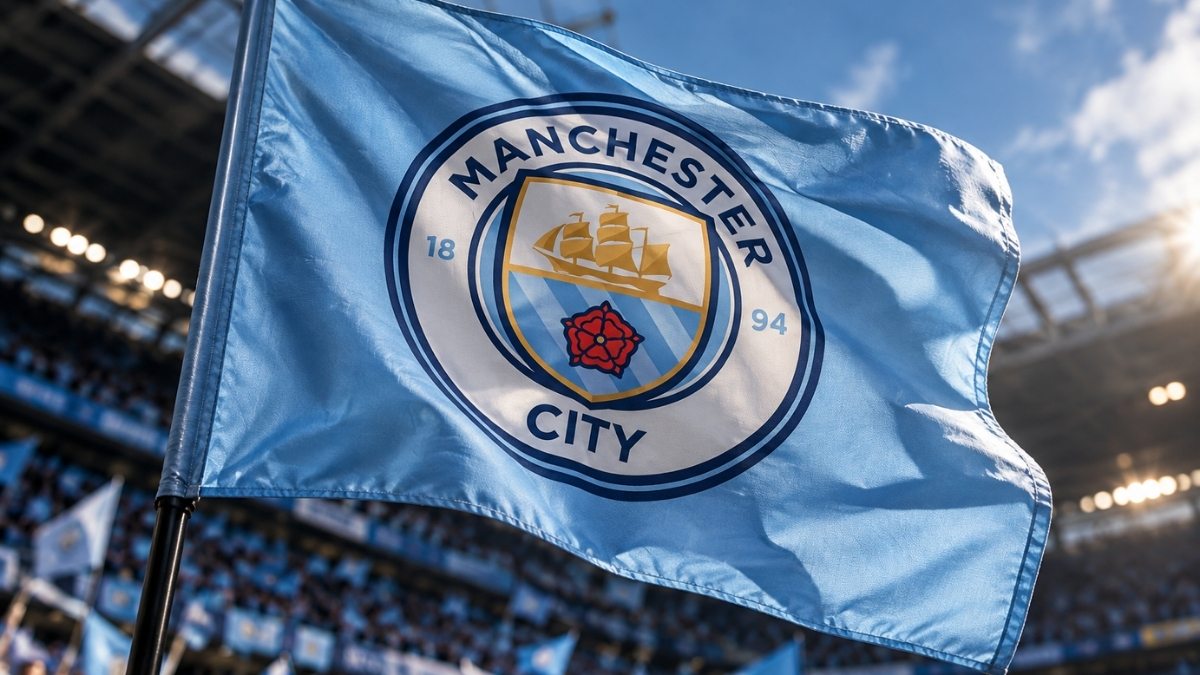
A Premier League appointed independent third-person commission has found Manchester City to be guilty in 114 of 54 counts of failure to provide accurate financial information, 14 counts of failure to provide accurate detail about player and manager payments, 7 counts of breaching Premier League's Profit and Sustainability Rules, 5 counts of breaching UEFA's Financial Fair Play regulations and 35 counts of failure to cooperate with investigations. The club was owned by Emirati royal Sheikh Mansour's Abu Dhabi United Group, from former Thai prime minister Thaksin Shinawatra. Mansour was the Minister of Presidential Court of UAE in 2004, Deputy Prime Minister in 2009 and Vice President in 2023.
Mansour ownership to the club is known for high transfer spending and directly sourced from the owner, as the Guardian reports that Mansour has financed over £650 million. Manchester City also has a gross spending of ~£1.94bn - £2.00bn, while Manchester United has ~£1.80bn - £1.90bn and Arsenal has ~£1.38bn. This move is so controversial that the UEFA then established the Finanical Fair Play regulations and Premier League remade its Profit and Sustainability Rules in 2013.
This has led to Manchester City becoming the fourth-most successful football club in history, with eight Premier League titles, four FA cups, seven EFL cups, and UEFA Champions League title in 2023. But these titles could be annuled, if Premier League decided as punishment.
The event goes way back in 2018, European Investigative Collaborations' Der Spiegel released a set of confidential documents, found by hacker Rui Pinto. Manchester City refused to provide direct response. In 2019, UEFA announced to open an investigation, following the reports, and the club "welcomes the decision." In 2020, UEFA concluded the investigation and found the club to be guilty of "serious breaches of the UEFA Financial Fair Play Regulations by overstating its sponsorship revenue in its accounts and in the break-even information submitted to Uefa between 2012 and 2016." The club was barred from UEFA leagues for two years, but the club appealed and overturned the rule. Premier League also initialised an investigation at similar time and found City to be in breach of severe financial rules, and said that it would refer its findings to an independent commission, selected by Premier League Judicial Panel.
The hearing began in September 2024 and ended in December, but the hearing and the result remained private. Last Friday, September 25, The Athletic found that Manchester City is guilty of 114 charges out of 115, and the club is expected to be appeal. Other rival clubs are expected to take legal action against Manchester City.
The events have taken 8 years until Premier League is expected to take action, and many has criticised the board for taking so long, as a result, in 2023 Premier League has introduced a fast track rules, and Everton and Nottingham Forest were prosecuted in 2023 and 2024 respectively under the new rule. New Premier League rules have been taken place since 2026/2027 season.
If the appeal is failed, Manchester City is expected to face significant punishment, even if it is not relegated. Heavy fines, points reduction or annulment of previous titles could be possible. As other clubs are seeking legal advices on prosecuting Manchester City (e.g. Arsenal, Manchester United and Liverpool), if they succeeded, each clubs could have a claim of over £100 million and City could lost half of its annual turnover.
The then-City manager Pep Guardiola said, "in the end, I know fairly that what we won we won on the pitch. We don't have any doubts." Ironically, the results of the hearing were leaked after he has officially leave in only a few weeks.
New York Times' editor said that it "threatens to rewrite years of Premier League history" and cause tension for the relationship between UK nad UAE given Mansour's governmental roles. Guardian's Barney Ronay wrote that City's "plastic success" was now "tainted", writing that "arguably everyone who bought a Sky Sports subscription in that period now has a legal claim against City"
Tenberal correspondent Simon Wong reports:
After the 2015 Gorkha Earthquake that stroked Nepal 11 years ago, Nepal faced yet another major disaster. But this time, it is not caused by earthquake, as reported by the Associated Press early on 26 August, but by the collapse of glacier.
According to the latest source, over 389 deaths are confirmed (in Nepal), and 910+ went missing in affected regions, including the Rasuwa District, Nuwakot District and the Dhading District in Northern Nepal. Of which missing, 644+ are foreign tourists, 127 are domestic Nepali toursits and 104 personnels or officials, unsure whether this includes foreign emergency workers.
Missing Foreign Nationals by Country in NEPAL
| Country | Reported Missing | Specific Details / Context |
| India | 178+ | — |
| China | ~100 | Confirmed by Chinese government |
| United States | 65 | — |
| Ukraine | 53 | — |
| Malaysia | 51 | — |
| Australia | 35 | Includes at least 34 pilgrims |
| United Kingdom | 33 | — |
| Canada | 24 | — |
| South Korea | 9 | Workers at a hydropower plant construction site |
| Belarus | ≥ 1 | — |
| Belgium | ≥ 1 | — |
| Bulgaria | ≥ 1 | — |
| Finland | ≥ 1 | — |
| France | ≥ 1 | — |
| Germany | ≥ 1 | — |
| Hungary | ≥ 1 | — |
| Ireland | ≥ 1 | — |
| Israel | ≥ 1 | — |
| Italy | ≥ 1 | — |
| Japan | ≥ 1 | — |
| Kazakhstan | ≥ 1 | — |
| Latvia | ≥ 1 | — |
| Lithuania | ≥ 1 | — |
| Netherlands | ≥ 1 | — |
| Philippines | ≥ 1 | — |
| Portugal | ≥ 1 | — |
| Russia | ≥ 1 | — |
| Serbia | ≥ 1 | — |
| Singapore | ≥ 1 | — |
| South Africa | ≥ 1 | — |
| Spain | ≥ 1 | — |
| Sweden | ≥ 1 | — |
| Switzerland | ≥ 1 | — |
| Tibet | ≥ 1 | Unsure whether this overlaps China's figure |
In Tibet, China's CCTV state media reported 3 fatalities and 558 are missing in Tibet, especially in Tibet's Gyirong County, which borders Nepal. Of which missing, 260+ are foreign tourists, 298 are local Tibetans or border staffs.
Missing Foreign Nationals by Country in TIBET*
| Country / Region | Official Status & Missing Count in Tibet (Gyirong) | Regional / Border Context |
| India | ~150–200+ (Estimated / Unverified) | Primary group of missing pilgrims transiting via Gyirong to Mt. Kailash. |
| United States | ≥ 1 (Unverified / Consular Manifest) | Trekkers and pilgrims on high-altitude Tibet tour packages. |
| Australia | ≥ 1 (Unverified / Consular Manifest) | Australian-Indian pilgrims on Kailash Yatra itineraries. |
| United Kingdom | ≥ 1 (Unverified / Consular Manifest) | British travelers on trans-Himalayan border itineraries. |
| Canada | ≥ 1 (Unverified / Consular Manifest) | Canadian citizens on overland Tibet border tours. |
| China | ≥ 1 (Unverified) | Chinese visitors or offcials |
| Ukraine | ≥ 1 (Unverified) | Trans-Himalayan expedition participants. |
| Malaysia | ≥ 1 (Unverified) | Regional border tour clients. |
| South Korea | ≥ 1 (Unverified) | Regional border travelers and energy plant contractors. |
| Belarus | ≥ 1 (Unverified) | Regional tourist list. |
| Belgium | ≥ 1 (Unverified) | Independent border trekkers. |
| Bulgaria | ≥ 1 (Unverified) | Independent border travelers. |
| Finland | ≥ 1 (Unverified) | High-altitude expedition members. |
| France | ≥ 1 (Unverified) | Himalayan border expedition members. |
| Germany | ≥ 1 (Unverified) | Trans-Himalayan trekkers. |
| Hungary | ≥ 1 (Unverified) | Individual border travelers. |
| Ireland | ≥ 1 (Unverified) | Border tour manifests. |
| Israel | ≥ 1 (Unverified) | Border transit itinerary list. |
| Italy | ≥ 2 (Unverified) | Identified upstream in the Gyirong valley area. |
| Japan | ≥ 1 (Unverified) | Overland border travelers. |
| Kazakhstan | ≥ 1 (Unverified) | Overland border travelers. |
| Latvia | ≥ 1 (Unverified) | Border trekking manifests. |
| Lithuania | ≥ 1 (Unverified) | Regional tour clients. |
| Netherlands | ≥ 1 (Unverified) | Cross-border trekking groups. |
| Philippines | ≥ 1 (Unverified) | Asian tour operator tracking. |
| Portugal | ≥ 1 (Unverified) | Foreign ministry tracking list. |
| Russia | ≥ 1 (Unverified) | Alpine Eco / regional border tour manifests. |
| Serbia | ≥ 1 (Unverified) | Regional tour manifests. |
| Singapore | ≥ 1 (Unverified) | Regional tour group members. |
| South Africa | ≥ 1 (Unverified) | High-altitude expedition members. |
| Spain | ≥ 1 (Unverified) | Regional tour clients. |
| Sweden | ≥ 1 (Unverified) | Trans-Himalayan tour clients. |
| Switzerland | ≥ 1 (Unverified) | High-altitude trekking lists. |
*We have consulted assistive technologies and correspondents in the making of this table, but some information are unverified due to the communication outages, and remained confused since some tourists who cleared Nepal borders have not yet been processed by Chinese or Tibetans, making the counts overlapping in Tibet and Nepal, we have sourced this information from independent, smaller tour operator across Asia and Europe.
Over 200 billion rupees (£964 million, 3.5% of Nepal's GDP) worth of infrastructure, such as hydropower facilities, dams, bridges, roads, schools, businesses, government offices, residential buildings are completely damaged and no longer functional, as floodwater reached 80m above sea level. Director of the Roads Department Bijaya Jaishi said that 19 bridges and 42 km of roads are damaged, which is initiallty estimated 15 billion Nepalese rupees (£72.31 million GBP, 0.3% of Nepal's GDP) to repair these roads, but further damages are expected. Humanitarian organisations confirmed that over 30,000 families are now homeless and 1200 people from three different villages are displaced. 20 schools and 6 major hydropower and transmission facilities are also completely damaged.
In China, road access, communications and electricity supply to the Gyriong Port area were cut off by the flood. The border crossing was reported as being "completely destroyed".
Follow Tenberal News for more information on the live situation in Nepal and a deeper dive into the international reliefs and scientifc causes.
Our dedicated team of journalists works around the clock to bring you accurate, insightful, and timely news coverage from around the globe.
Have a news tip, story idea, or feedback? Our team is always ready to listen. Reach out through any of the channels below or fill out the contact form.
Get the day's top stories delivered to your inbox every morning. Join all the readers who trust Tenberal News.
No spam, ever. Unsubscribe anytime.